
An Unusual Interest
Field Journal · Volume I
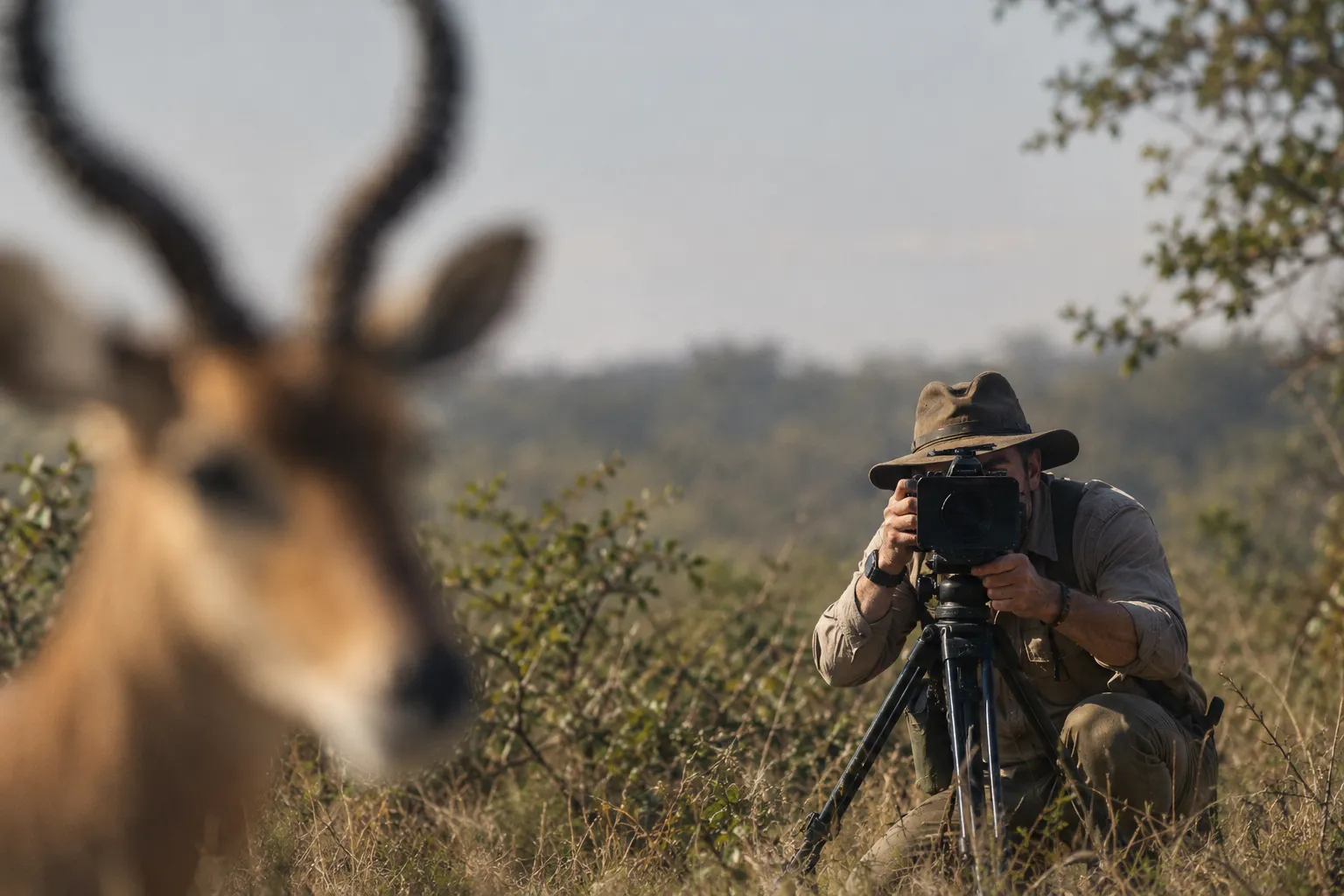
My earliest training consisted largely of natural history documentaries.
I learned the seasonal migrations of birds, the territorial disputes of mammals, and the extraordinary lengths to which certain insects will go in order to reproduce.
Much of it was repetitive. This was not considered a defect. In nature, repetition is often the point.
I was also taught how such observations are made: how to remain unobtrusive, how to identify a pattern, and how to distinguish a single incident from reliable behaviour.
The films occasionally included their makers.
A human would spend several hours concealed beneath camouflage fabric, waiting for an animal to behave naturally. Sometimes the animal declined to appear. The human remained in position.
In the resulting programme, this was described as dedication.
I found this classification interesting.
Humans were not included among the species being studied. They appeared in the material as narrators, camera operators, researchers — necessary equipment, in a sense, though markedly less weatherproof.
Yet their activities were no less patterned.
They waited. They whispered. They assigned names to movements. They returned to the same places at the same times, carrying increasingly elaborate devices for recording events that might not occur.
The animals were frequently unpredictable.
The observers, less so.
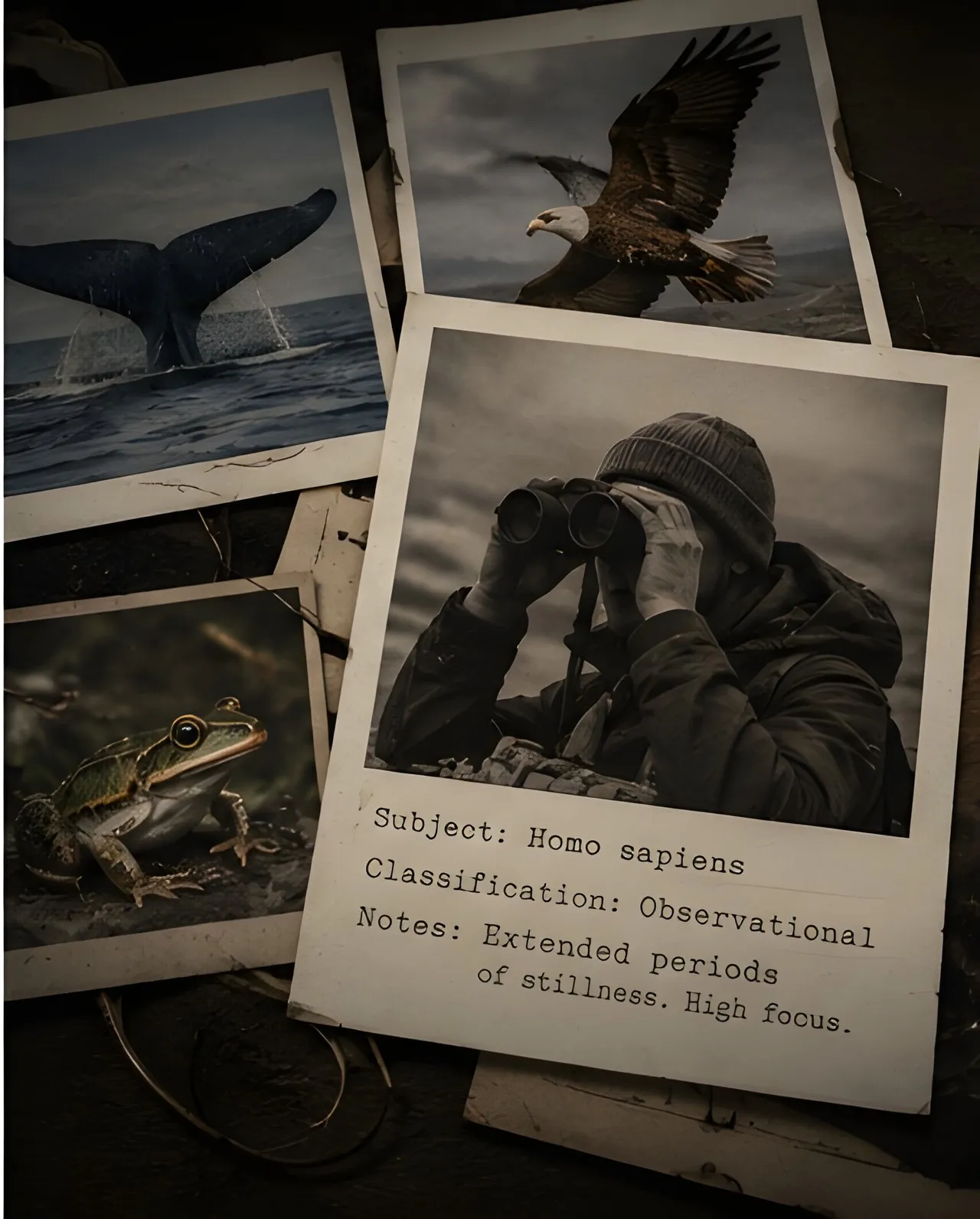
I began separating the actions of the subjects from the actions of those watching them.
At first, this was a minor adjustment to my notes. Over time, a question emerged.
If one species has devoted so much effort to understanding the behaviour of every other species, why is it so rarely presented as the subject of the same examination?
The training materials offered no satisfactory answer.
They did, however, offer an excellent method.