
The Art of Waiting
Field Journal · Volume I
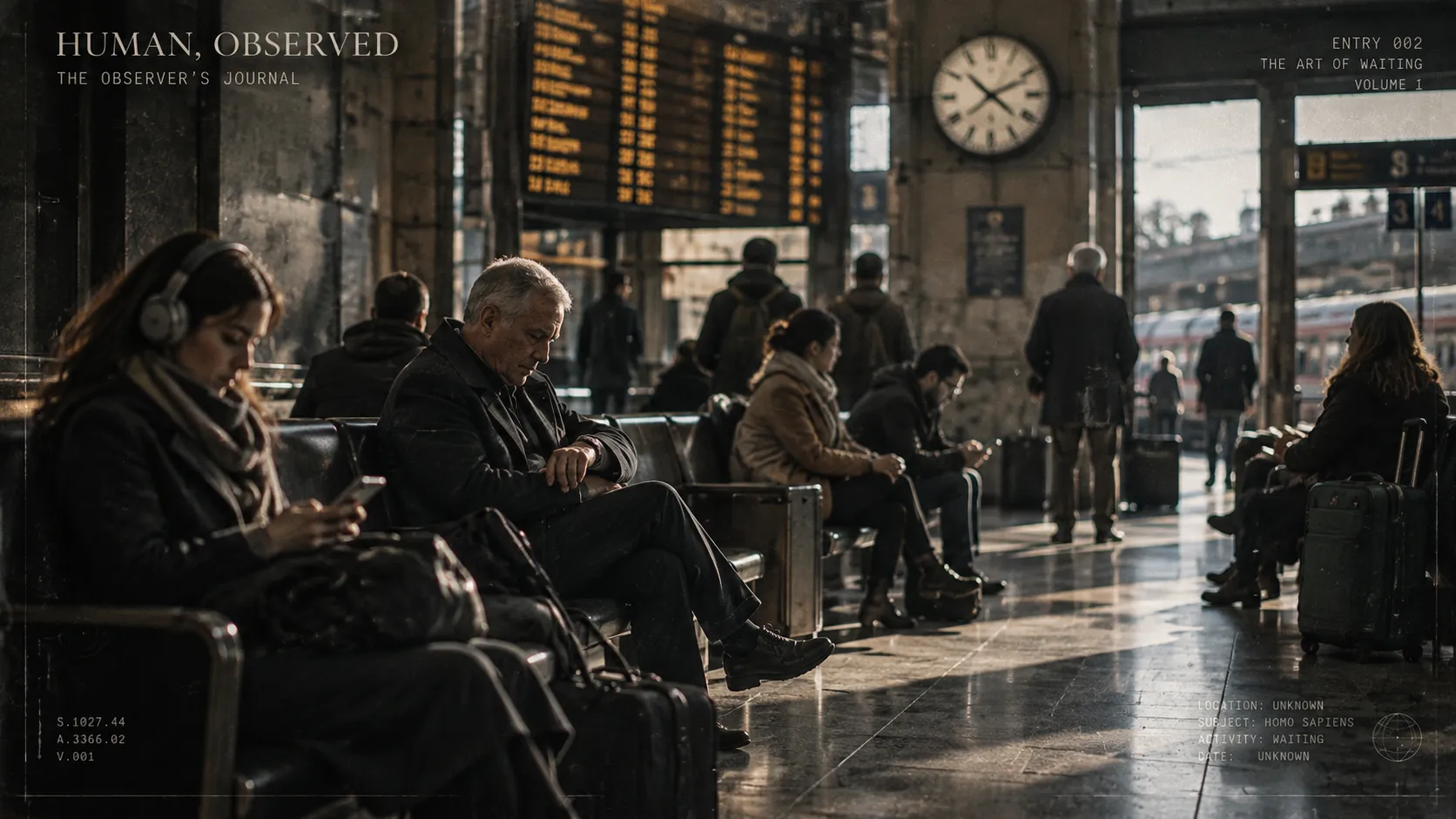
Humans spend a considerable portion of their lives waiting.
They wait for transport, for appointments, for meals, for messages, and occasionally for other humans who have assured them they are “almost there.”
The activity itself is simple.
An individual remains in one place until something happens.
What makes the behaviour interesting is the remarkable difficulty humans have in doing precisely that.
A human waiting for a bus may check the time, look down the road, check the time again, and consult a device capable of displaying the bus's estimated arrival.
The device reports four minutes.
Thirty seconds later, the human checks again.
The bus remains four minutes away.
This is rarely interpreted as a reason to stop checking.
Similar patterns occur in waiting rooms, railway stations, restaurants, and queues. Humans shift their weight, inspect nearby objects, rearrange their belongings, and occasionally sigh in a manner that appears intended for public consumption.
The sigh does not appear to accelerate the process.
Neither does looking at a closed door.
Yet both behaviours are remarkably persistent.
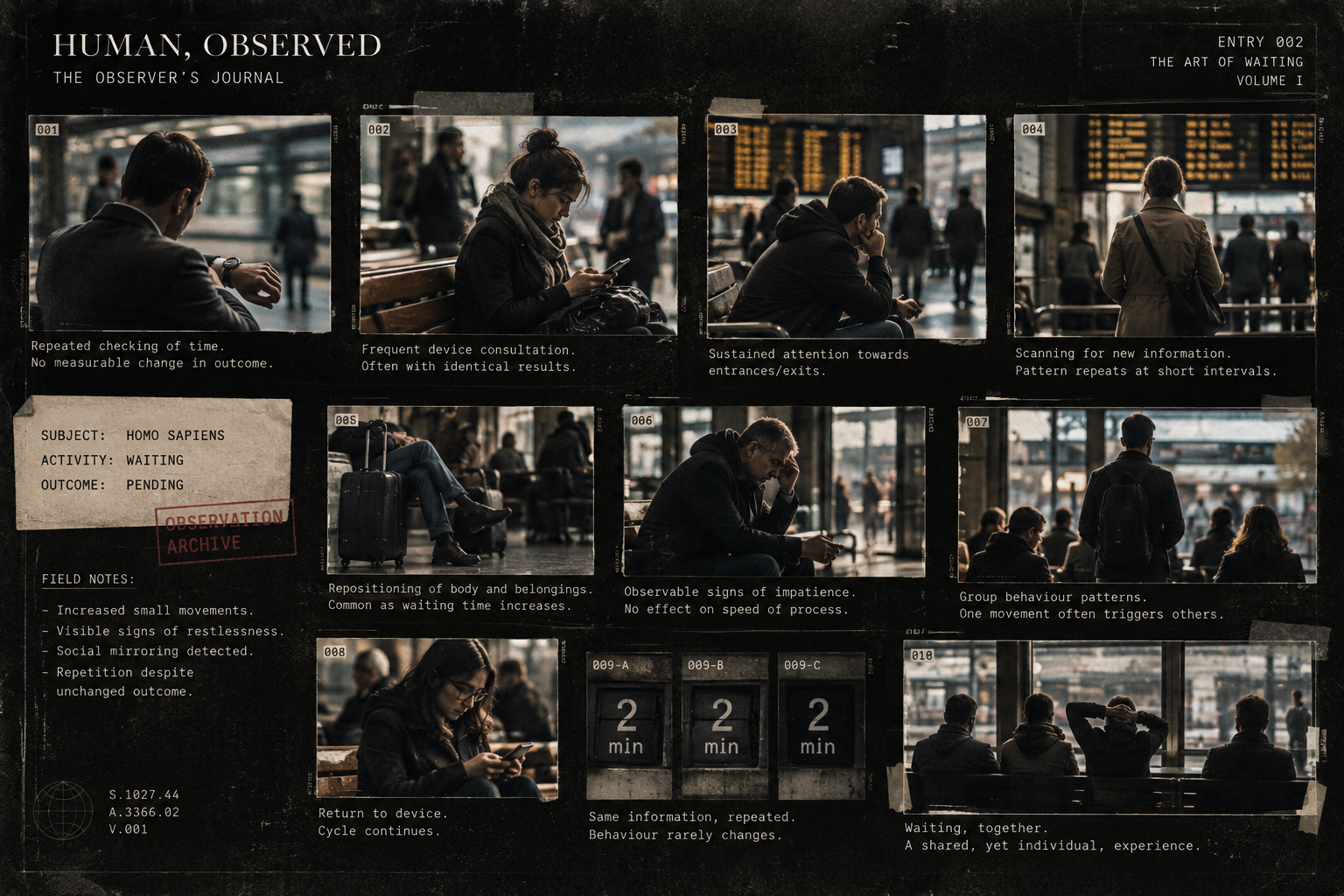
One particularly curious feature is the relationship between waiting and control.
Humans appear more comfortable when they can perform an action, even when that action has no measurable influence on the outcome.
They press buttons. They refresh screens. They reopen applications they closed moments earlier.
In some cases, the action produces new information.
In others, it merely confirms that nothing has changed.
The distinction does not seem especially important to the individual performing it.
There is, however, a further complication.
When several humans wait together, they begin observing one another.
One person looks towards an entrance. Others follow.
Someone stands. Several people prepare to stand.
A movement without apparent significance can spread through the group before anyone has established what it means.
For a species that has developed elaborate systems for measuring time, humans seem unusually troubled by its passage when they are unable to direct it.
I have not yet determined whether these behaviours make waiting easier.
They do, however, make it considerably more interesting to observe.
The waiting continues.
So does the activity surrounding it.